February in Yosemite: Landscape Photography in the Valley in Winter
- Paul Anderson
- Mar 12
- 7 min read
What it actually looks like to spend two weeks doing landscape photography in Yosemite Valley in winter
February 2026 · Yosemite Valley, CA · Paul Anderson, Nature & Landscape Photographer
I’ve been doing nature and landscape photography in Yosemite for years, and it still does something to me that I can’t quite explain. Not the postcard version — not the blue-sky-Half-Dome-tourists-everywhere version that most people picture. The February version. The one with low clouds dragging through the valley, the Merced running dark and full, Bridalveil Fall actually falling instead of trickling, and a cold that gets into the granite and makes the whole place feel more real somehow. I spent two weeks there this February leading photography workshops, and I came home with more keepers than I expected and a few reminders about why Yosemite in winter keeps pulling me back.
I want to write honestly about what Yosemite landscape photography actually looks like from the inside — not the highlight reel, but the full picture. Because there’s a version of this life that gets talked about on social media that’s all golden light and perfect images every morning, and then there’s the real version: early alarms, cold fingers, and days where the light just doesn’t show up. Both versions happened in February. Here’s what I remember.
Tunnel View: The Most Demanding Location in Yosemite Landscape Photography
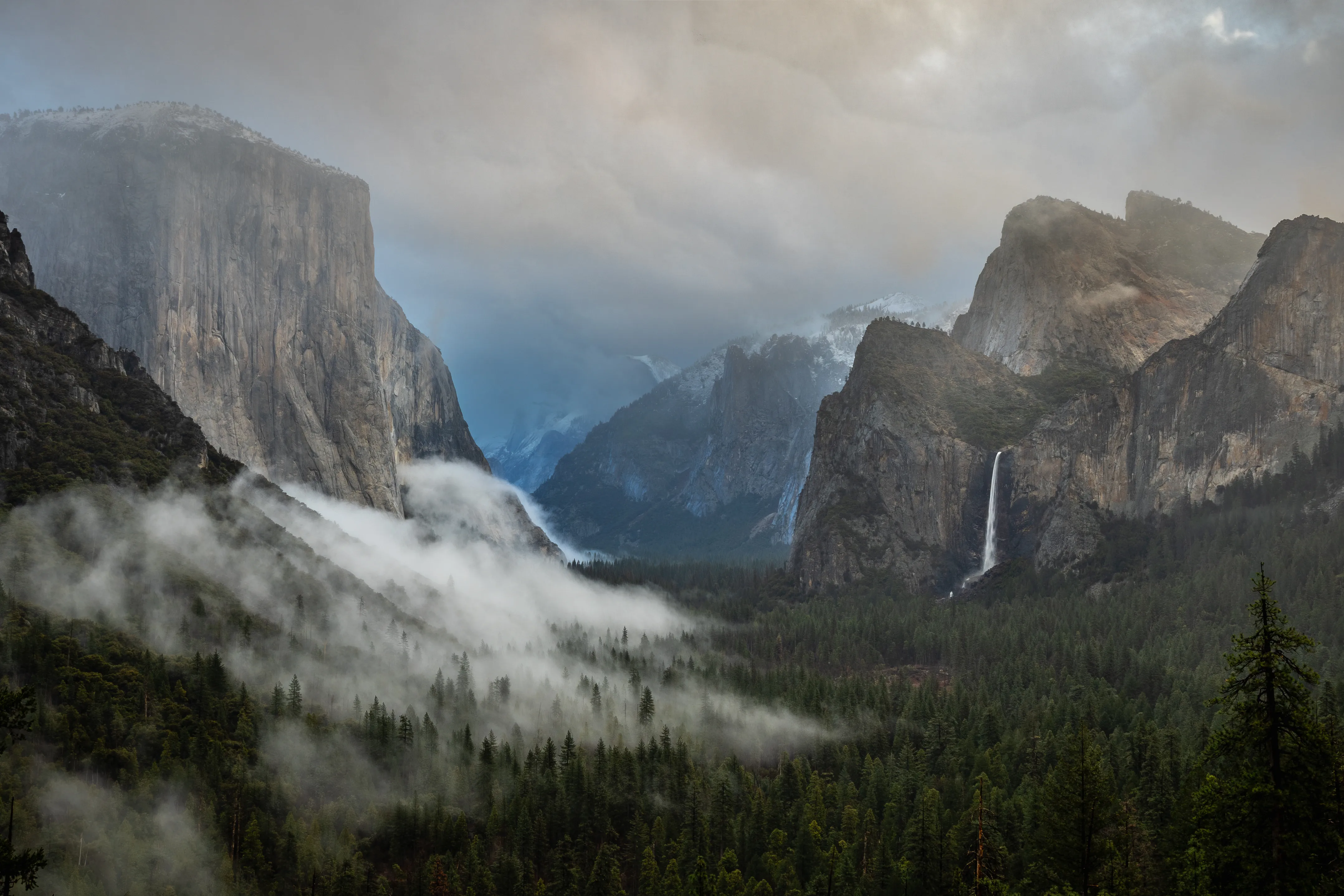
Every photographer who comes to Yosemite goes to Tunnel View. I’ve been there more times than I can count, and I still set up there on multiple mornings every trip. Not because it’s easy — it’s actually one of the more frustrating spots for landscape photography in Yosemite Valley — but because when it works, there’s genuinely nothing else like it.
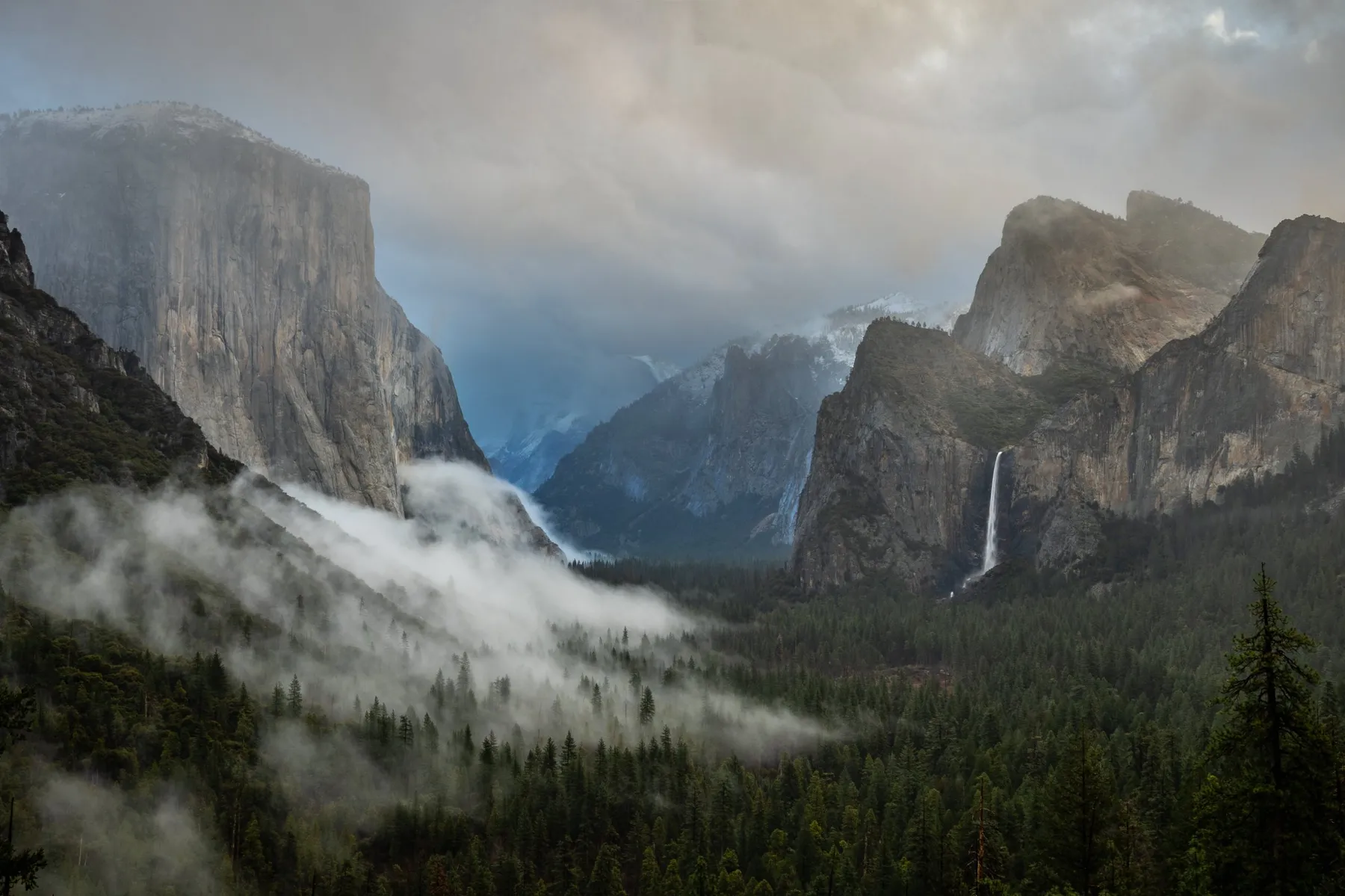
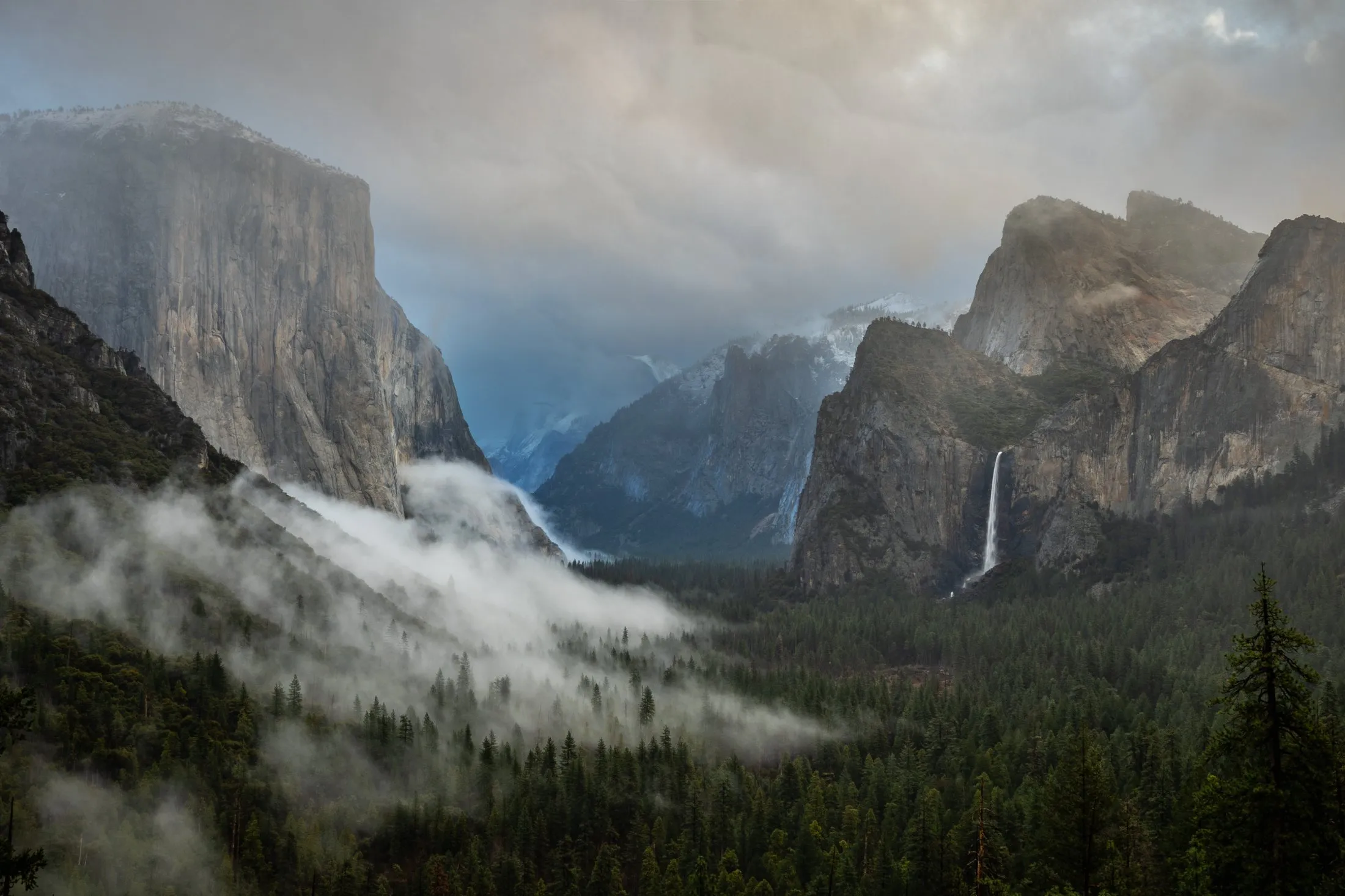
The problem with Tunnel View is that it looks incredible in photographs and mediocre in person about 80 percent of the time. You’re standing on a raised overlook, the valley is spread out below you, and if the light is flat and the sky is clear, you get a competent landscape photo that looks exactly like the thousands of other competent landscape photos made from that spot. What you need for exceptional nature photography here is a specific set of conditions: low cloud, moisture in the air, Bridalveil running hard, and enough warmth in the sky to push color into the mist. When those things align, you’re making one of the best landscape photographs available anywhere in the American West.
This February gave me both versions. I had mornings where I stood there for an hour and drove back with nothing. And I had a morning where mist was pouring over the base of El Capitan in slow horizontal waves, Bridalveil was thundering through clearing cloud, and I was physically shaking trying to hold still long enough to get a sharp frame. That morning I shot for two and a half hours and didn’t want to leave. The image below took four mornings to get.

I try to be honest with people I’m teaching about this. The conditions that produce exceptional landscape photography in Yosemite are not the norm — they’re the exception. The job is to be there enough times that you’re present when the exception happens, and to not waste the ordinary days. The ordinary days are when you figure out your compositions, your gear settings, your position on the overlook, so that when the light finally arrives you’re not fumbling.
“The conditions that produce exceptional landscape photography are not the norm. They’re the exception. The job is to be there enough times.”
What I Shoot When the Grand Yosemite View Isn’t Working
One thing I find myself teaching more and more is the pivot. When the sky is flat, the light is gone, and you’ve been standing at the overlook for forty minutes — do you pack up and drive to the next location, or do you put down the wide angle and start looking closer?
For nature and landscape photography in Yosemite, I almost always choose closer. The valley in winter, especially in rain, is full of subjects that have nothing to do with the famous skyline. The tributaries off the Merced are running hard and full of long-exposure potential. The granite faces are sheeting with water, catching diffused grey light in ways that create extraordinary tonal images — almost monochromatic, all texture and weight. The wet forest along the valley loop has a quiet darkness that a telephoto lens can really dig into.
These intimate sessions are what I find personally most satisfying about nature photography in Yosemite. Not because they’re more impressive than a good Tunnel View sunrise, but because they require a different kind of attention. You’re not waiting for the landscape to perform. You’re hunting. And when you find something — a rock with water threading around it, a waterfall compression shot that turns the whole thing abstract — it feels more earned.


El Capitan After Snowfall: Winter Landscape Photography in Yosemite Valley
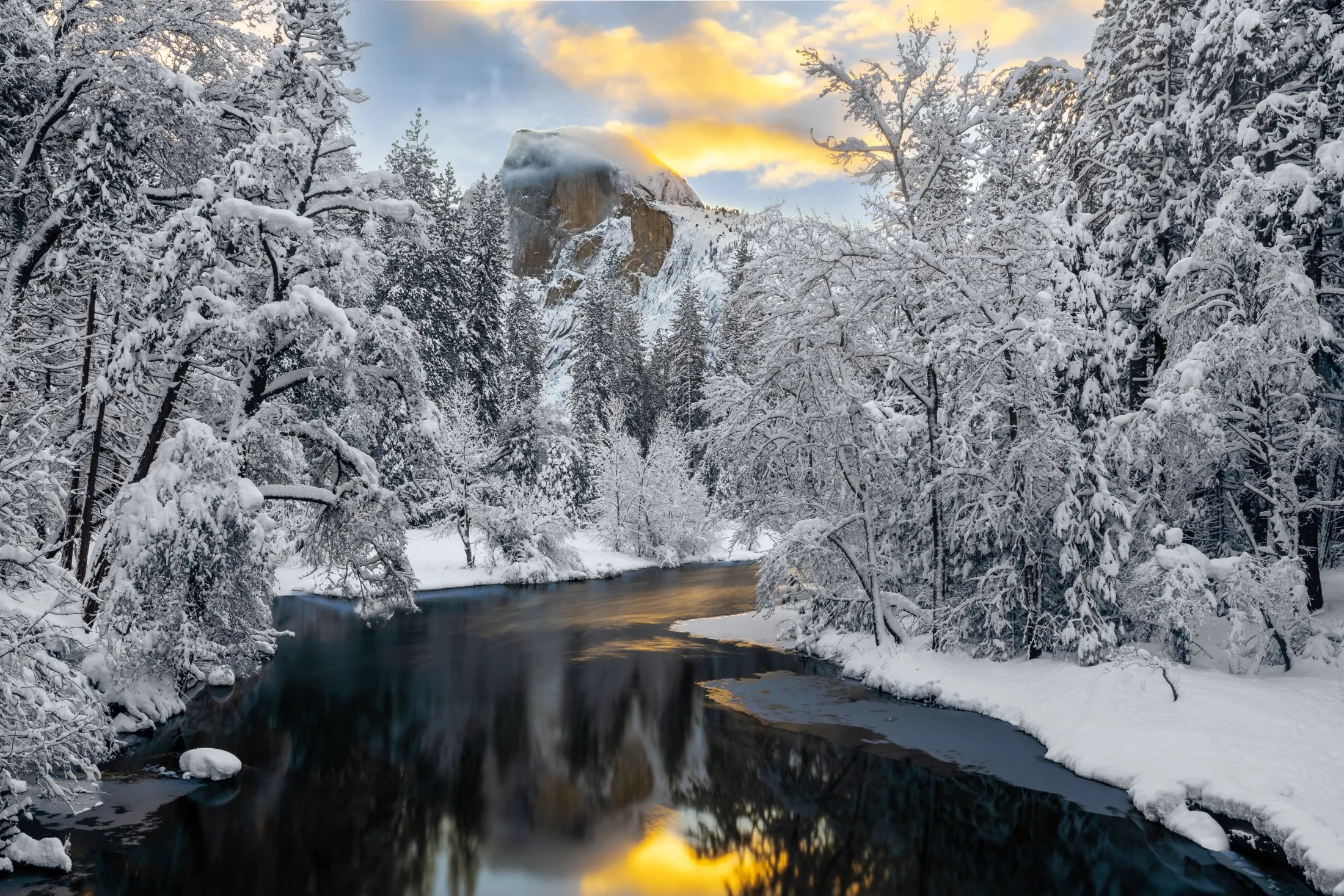
The second half of February brought serious snow to the valley — the kind that transforms overnight and makes everything you photographed the day before look like a different location. I’ve done landscape photography in Yosemite under snow before, but not like this. The Merced slowed and went quiet. Every branch on every conifer was bent under the weight of it. The valley floor was white and the sky was a moving grey ceiling that kept breaking open in short windows of pale gold.
My favorite position for El Capitan nature photography is from the river, looking east, with the Merced in the foreground. In summer that shot is fine. After a heavy snowfall, with fresh snow on the banks and the pines loaded and El Cap emerging from thinning cloud above, it becomes something completely different. The image below was made in a twenty-minute window. I was already at the river because I’d been watching the sky from the lodge and saw the cloud base beginning to lift — the single most important skill in winter landscape photography anywhere.


Being in position before the light arrives is something I talk about constantly when I’m teaching landscape photography. It sounds obvious. In practice it means getting up when you don’t want to, driving to a location before you know whether it’s worth driving to, and standing in the cold waiting for something that may or may not happen. February in Yosemite taught me again why it matters.
Sentinel Bridge and the Half Dome Reflection: Yosemite Winter Photography at Its Best
I’ll be honest: I wasn’t sure about Sentinel Bridge this trip. I’d been there a dozen times, I had the Half Dome reflection shot, and I wasn’t certain I had anything new to say with it as a landscape photography subject. I went anyway — because the known locations change, and that’s the whole point of coming back.
On the third morning after the snowfall, the sky broke open for about eight minutes between dawn and full light. A gap in the cloud sent one clean band of orange-gold across the top of Half Dome while the valley floor was still completely in shade. The river was mirror-flat. The snow-loaded trees on either bank were white against the dark sky. Every element of Yosemite winter landscape photography was right there, fully formed and waiting. I fired forty frames in those eight minutes and had the shot by the fourth. This is why you go back to locations you think you’ve already photographed.


That’s the thing about nature and landscape photography in Yosemite that I keep relearning: the decisive moment is usually over before you’ve finished deciding. The camera either comes up or it doesn’t. The position is either right or it isn’t. All the preparation — the early starts, the repeated visits, the studying of light direction and cloud behavior — exists so that the moment the scene arrives, you’re already inside it.
Why Yosemite in Winter Is the Best Landscape Photography Season
After years of nature and landscape photography in Yosemite across every season, February is the one I keep coming back to. Not because it’s the easiest — it’s not. Pre-dawn starts in below-freezing temperatures, unpredictable weather that can shut down an entire morning’s session without warning, and the constant tension between waiting for exceptional light and accepting that today might not be the day. But winter strips the valley back to its essentials in a way no other season does.
The crowds are gone. The waterfalls are running. The light comes in low and raking and full of drama because the sun never gets high enough to flatten everything out. The Merced carries reflections that summer’s low water level can’t produce. And when snow falls — really falls, the way it did in the second half of this February — the valley becomes the kind of landscape photography subject that you couldn’t invent if you tried. White and grey and dark water and those impossible granite walls, just sitting there.
Leading photography workshops here means I don’t always come home with every image I could have made working alone. That used to bother me. It doesn’t anymore — mostly because explaining a location out loud forces you to articulate things you’d otherwise just feel and act on, and that makes you a sharper photographer over time. I know Yosemite better for having described it a hundred times. And I know that the best Yosemite landscape photography isn’t about gear, or even about technique. It’s about coming back.
If you want to follow along on future trips — nature and landscape photography in Alaska this summer, Svalbard in August, Africa in October — I post the real version on Instagram. The misses as well as the keepers. @paulanderson_photography
— Paul / paulandersonphoto.com


Comments