top of page

Is Svalbard Still Worth Visiting? What the New Polar Bear Rules Mean for Wildlife Photography

An iconic moment from Svalbard, Norway — a wild polar bear feeding on a narwhal carcass under the Arctic midnight sun. Captured during a polar bear photography expedition led by wildlife photographer Paul Anderson. A true glimpse into Arctic life and survival.


By Paul Anderson — Nature & Wildlife Photographer


There’s a quiet tension in the Arctic, a sense that anything could emerge from the fog at any moment. When I returned from Svalbard this past August, the first question friends and potential workshop guests asked was almost always the same:


"With the new polar bear restrictions, is it still worth going?"


It’s a valid question. For years, photographers traveled here chasing iconic, close-up polar bear portraits. Today, regulations enforce distance. Approaching bears on land is limited, and zodiacs can’t drift within meters of them as they once did.

But Svalbard’s allure extends far beyond these restrictions. If anything, it has made the Arctic feel more alive, more wild, and more rewarding. For photographers willing to embrace the landscape, the light, and the unpredictability of nature, Svalbard remains unmatched.


Endless ice and midnight light — the landscape alone makes Svalbard one of the most photogenic regions on Earth.

The Guillemots, Puffins, and Arctic Life

During my workshop, we spent a day at one of Svalbard’s largest black guillemot colonies. Thousands of birds swirled in the air above the cliffs, their cries punctuating the Arctic silence. Young birds made their first tentative flights — some gliding out to sea, others falling prey to gulls or intercepted by Arctic foxes darting along the rocks. It was an intimate look at the precarious balance of life and death — a photographer’s dream for storytelling images.

Thousands of seabirds swirl around Svalbard’s iconic cliffs — home to guillemots, kittiwakes, and puffins. This rich nesting site is one of the Arctic’s most dynamic wildlife photography locations.


A parent guillemot gently tends to its chick in the icy Arctic waters — a tender moment that shows the softer side of life in Svalbard’s wild ecosystem.

Later, we visited a puffin colony, one of the few accessible in late August, where visitors can walk among the birds in surprising numbers. Here, photography became both technical and visceral. Some shots demanded long lenses; others allowed me to use my Canon 24–70mm, capturing puffins at arm’s length, birds in flight, and the delicate interaction of these iconic seabirds with their rugged environment.

Puffins fill the cliffs each August — sometimes so close I shoot them with a 24–70mm lens instead of a long telephoto.

A wild Atlantic puffin returns to its nesting cliff in Svalbard, Norway, with a beak full of fish. Captured during a Paul Anderson wildlife photography expedition, this image highlights the precision and beauty of Arctic seabirds in flight.

And that’s only part of Svalbard’s offering. Walrus haul-outs, Arctic foxes patrolling the beaches, and ever-changing landscapes — ice meeting mountains, endless fjords, and glaciers — all provide endless photographic opportunities. Here, wildlife is inseparable from landscape, and the scale of the world’s third-largest ice sheet reminds you why this place is extraordinary.

Walrus haul-outs add drama and scale, offering a glimpse into the Arctic’s ancient rhythm.

A young Arctic fox scans the tundra under the soft Arctic light of late August. Its transition coat reflects the seasonal change — one of the many photographic highlights of Svalbard’s short, vibrant summer.

A close-up portrait of an Arctic fox reveals its deep amber eyes and thick winter coat — an intimate look into the soul of one of the Arctic’s toughest survivors.
An Arctic fox in Svalbard captures a gull in its jaws — a striking scene that highlights the harsh beauty of the Arctic food chain. This image embodies the wild balance of predator and prey in the far north.

A white Arctic fox peeks from green moss-covered cliffs in Svalbard. This rare moment shows how life thrives even in the most remote Arctic landscapes — a favorite scene for Arctic wildlife photographers.

Polar Bears in the Wild

Even under the new rules, polar bears remain the pinnacle of Svalbard’s wildlife experience. On land, we captured bears as environmental subjects — small figures against vast expanses of ice and snow, a perspective that emphasizes scale and habitat rather than proximity.

Two polar bears sleep peacefully on the rocky shores of Svalbard after a long night’s hunt — a rare glimpse of calm in a land ruled by ice and instinct.

Yet it was further north, 2.5 days into the pack ice at 83° North, where the Arctic revealed its true spectacle. There, free from territorial limits, we witnessed twelve polar bears gathered around a narwhal carcass, feeding, interacting, and moving across the ice as if choreographed by the land itself. The scene was both chaotic and serene, a moment of life and survival at the very edge of the world.

One encounter stands out: a bear wandering close to our vessel. Through the porthole, I stared into its eyes — roughly ten feet away. It wasn’t threatening; it was intimate, humbling, and completely unforgettable. These are the moments that make the patience, planning, and uncertainty of Arctic photography worth every hour.

An iconic moment from Svalbard, Norway — a wild polar bear feeding on a narwhal carcass under the Arctic midnight sun. Captured during a polar bear photography expedition led by wildlife photographer Paul Anderson. A true glimpse into Arctic life and survival.
Two polar bears clash over a seal kill in the frozen wilderness of Svalbard. This rare wildlife encounter shows raw Arctic behavior — strength, instinct, and survival — moments that define the power of Arctic wildlife photography.

Wild meets human — a curious polar bear approaches a ship of photographers in Svalbard. Captured during a Paul Anderson Arctic photo tour, this encounter perfectly illustrates the thrill and respect of photographing wildlife in the wild.
A polar bear peers through a ship’s porthole, just feet away from the lens — a once-in-a-lifetime moment of curiosity and connection in the high Arctic.

Two Polar Bears feeding on a fresh Narwhal kill on the Ice above Svalbard

Svalbard vs. Churchill: A Photographer’s Choice

Many compare Svalbard to Churchill, Canada, in terms of polar bear photography. Churchill offers reliability and up-close portrait opportunities — the bears are accustomed to human presence, and encounters are predictable.

Svalbard, however, is about true wilderness. It’s about the unpredictability of life on the ice, the interplay of landscape and wildlife, and the broader Arctic ecosystem. One day it’s bears, the next it’s walrus, puffins, or Arctic foxes — each encounter a story waiting to be told. Photographers who embrace patience and respect for wildlife find Svalbard infinitely more rewarding for both images and experience.


Photographers explore the towering blue ice of a Svalbard glacier by zodiac — one of the most unforgettable moments from an Arctic photo tour led by Paul Anderson.


Why Svalbard Remains One of My Top Photography Destinations


For me, Svalbard continues to be one of the top wildlife photography destinations in the world. Its combination of wildlife, landscape, and light challenges you to see creatively, shoot thoughtfully, and tell stories beyond simple animal portraits.

I’ll be returning next August for two more workshops, and the anticipation is already palpable. Every trip is different, every encounter unique, and every moment a reminder of the magic of the Arctic.

Svalbard may have changed, but it remains a place where patience is rewarded, stories unfold naturally, and the Arctic still surprises. For photographers seeking more than just a photo — for those seeking immersion, adventure, and the rare thrill of true wilderness — Svalbard remains irresistible.


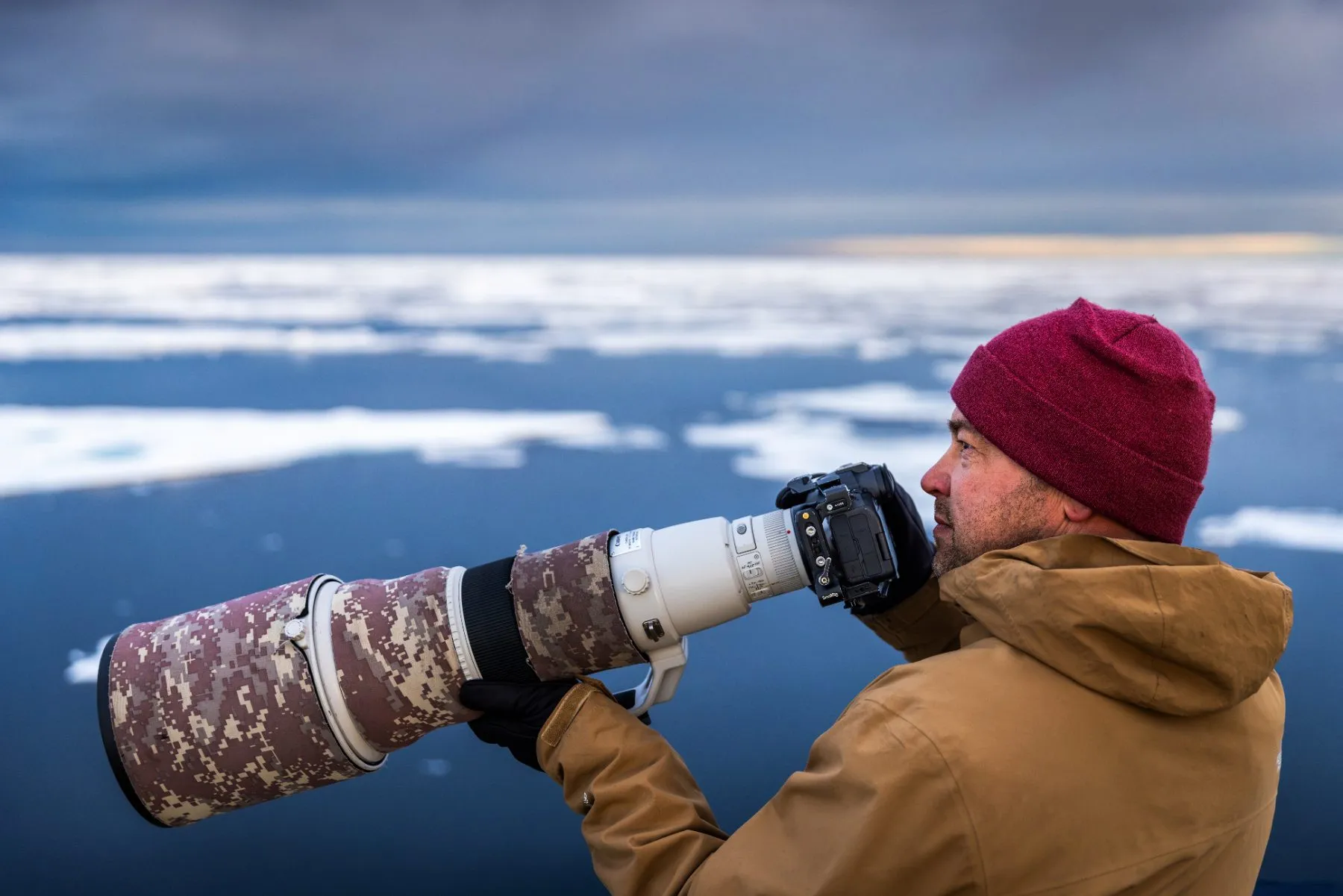
Wildlife photographer Paul Anderson captures the raw beauty of Svalbard’s ice-filled seas from the bow of an expedition ship. Equipped with his Canon mirrorless camera and 600mm lens, Paul leads guests on Arctic photo tours focused on polar bears, Arctic foxes, puffins, and glacial landscapes — moments where light and wilderness meet.

Paul Anderson is a wildlife and nature photographer specializing in immersive photography workshops worldwide. From Alaska to Borneo to the Arctic, he guides small groups to experience and capture wild places ethically and responsibly


Comments


© 2024 by Paul Anderson Photography 

Paul Anderon photography logo
bottom of page